

Bias in Artificial Intelligence: Why Algorithms Aren’t Neutral | Causes, Risks and Solutions
1 minute ago · Updated 1 minute ago

Bias in Artificial Intelligence: Why Algorithms Aren’t Neutral
Bias in Artificial Intelligence: Why Algorithms Aren’t Neutral is not just a technical concern—it is one of the defining ethical challenges of modern technology. As artificial intelligence systems increasingly influence hiring decisions, medical diagnoses, loan approvals, policing strategies, and even social media feeds, understanding bias becomes essential for building fair and trustworthy digital systems.
Artificial intelligence (AI) is often described as objective, data-driven, and immune to human subjectivity. However, research and real-world evidence consistently show that algorithms can reflect and even amplify social inequalities. Rather than existing in a vacuum, AI systems are created by humans, trained on historical data, and deployed within complex social contexts. That means they inherit the patterns—both good and problematic—found in the world around us.
This article explores what bias in Artificial Intelligence really means, why algorithms are not neutral, how bias enters AI systems, real-world examples of algorithmic discrimination, and practical strategies to mitigate these risks. By understanding the science and sociology behind AI development, we can move toward more equitable technological futures.
Table
- What Is Bias in Artificial Intelligence?
- Why Algorithms Aren’t Neutral
- How Bias Enters AI Systems
- Real-World Examples of Algorithmic Bias
- The Ethical and Social Impact
- Strategies to Reduce Bias in AI
- Regulation and Governance
- The Role of Developers and Organizations
- Why This Matters for the Future of AI
- Frequently Asked Questions (FAQ)
What Is Bias in Artificial Intelligence?
In simple terms, bias in AI refers to systematic and unfair discrimination embedded in algorithmic systems. It occurs when an AI model produces outcomes that are skewed, prejudiced, or disproportionately harmful to certain groups.
Bias can manifest in several ways:
- Data bias: Training data reflects historical inequalities.
- Algorithmic bias: The model’s structure amplifies certain patterns.
- Measurement bias: Variables used as proxies distort reality.
- Deployment bias: The context of use creates unintended consequences.
AI systems are not inherently discriminatory. However, because they learn from data, they replicate existing social dynamics. As discussed in our article on Explainable AI, transparency is essential to understanding how these systems reach decisions.
Why Algorithms Aren’t Neutral
Algorithms are mathematical instructions. On the surface, math seems objective. But algorithms are built through a chain of human decisions:
- What data to collect
- Which variables to include
- How to label outcomes
- What success metrics to optimize
- Where and how the model will be deployed
Each of these choices embeds assumptions. For example, a hiring algorithm trained on historical company data may favor male applicants if the company historically hired mostly men. The algorithm is not “choosing” to discriminate—it is identifying statistical patterns. However, those patterns reflect social inequalities.
This issue connects to the broader challenges explored in The Limits of Artificial Intelligence, where we examine how AI lacks contextual and ethical reasoning without human oversight.
How Bias Enters AI Systems
1. Historical Data Inequality
Machine learning models rely on large datasets. If those datasets reflect unequal access to healthcare, education, housing, or employment, the model will learn those inequalities as predictive signals.
For example, predictive policing systems trained on historical arrest data may over-target minority neighborhoods because those communities were historically over-policed.
2. Underrepresentation in Data
When certain groups are underrepresented in datasets, AI performance can degrade for them. Facial recognition systems have historically shown lower accuracy for women and people with darker skin tones due to imbalanced training data.
According to research from the National Institute of Standards and Technology (NIST), some facial recognition algorithms exhibited significantly higher false positive rates for specific demographic groups.
3. Proxy Variables
Sometimes sensitive attributes like race or gender are excluded from models. However, proxy variables (such as ZIP code or purchasing behavior) may indirectly encode those characteristics.
4. Objective Function Choices
AI systems optimize specific mathematical goals—accuracy, efficiency, profit, engagement. If fairness is not explicitly defined as a goal, the system may optimize in ways that disadvantage certain populations.
Real-World Examples of Algorithmic Bias
Healthcare Risk Prediction
One widely cited study revealed that a health algorithm used to allocate care underestimated the medical needs of Black patients because it used healthcare spending as a proxy for health status. Historically, less money was spent on Black patients due to systemic inequalities, leading the system to conclude they were “healthier.”
Hiring Algorithms
An experimental hiring tool trained on historical resumes learned to penalize applications that included indicators of being female, because past hiring patterns favored male candidates.
Credit Scoring and Lending
Automated lending systems may disadvantage certain communities due to correlations between financial history and systemic economic barriers.
As we explore in AI in Scientific Research, AI has enormous positive potential—but without oversight, risks can scale quickly.
Algorithmic bias is not just a technical flaw—it is a societal risk. When AI systems determine access to employment, credit, education, or medical care, biased outcomes can reinforce structural inequality.
This raises critical questions:
- Who is accountable when AI causes harm?
- Should algorithms be regulated like pharmaceuticals?
- How do we audit complex machine learning models?
These questions intersect with broader debates discussed in Verifiable Science: When Science Must Be Transparent, emphasizing the importance of accountability in scientific systems.
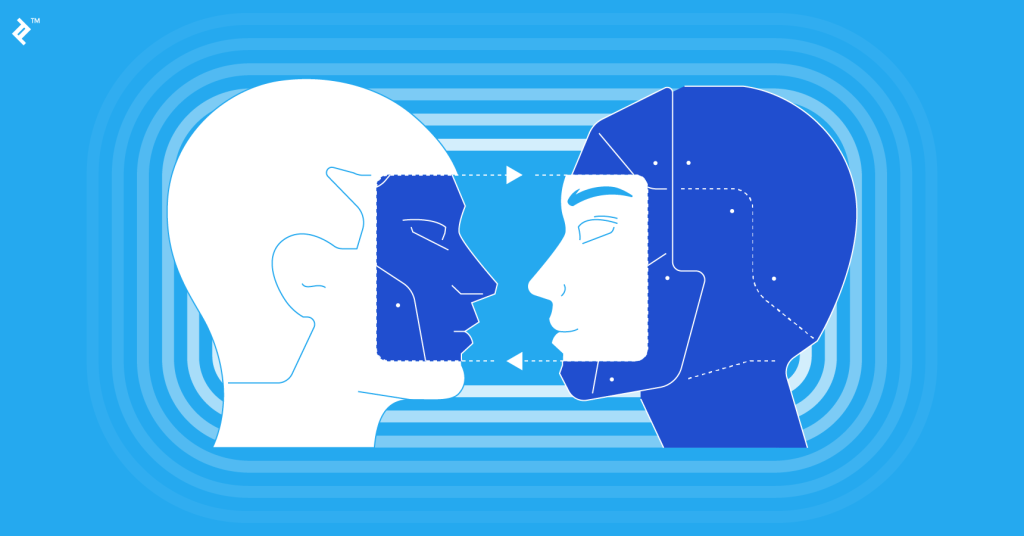
Strategies to Reduce Bias in AI
1. Diverse and Representative Data
Ensuring training datasets include diverse populations is foundational. Data audits should evaluate representation across demographic groups.
2. Fairness-Aware Algorithms
Researchers have developed statistical definitions of fairness, such as equal opportunity and demographic parity. These constraints can be incorporated during model training.
3. Explainability and Transparency
Interpretable models help identify discriminatory patterns. Tools in explainable AI allow stakeholders to understand feature importance and decision pathways.
4. Independent Auditing
Third-party audits can evaluate AI systems before and after deployment. Continuous monitoring ensures systems do not drift into discriminatory patterns.
5. Human Oversight
AI should augment human decision-making—not replace it entirely. Human review adds contextual judgment and ethical reasoning.
Regulation and Governance
Governments worldwide are developing AI regulatory frameworks. The European Union’s AI Act, for example, categorizes AI systems by risk level and imposes stricter requirements on high-risk applications.
Ethical AI development increasingly follows principles such as:
- Transparency
- Accountability
- Fairness
- Privacy protection
- Human agency
Effective governance requires collaboration between technologists, policymakers, ethicists, and affected communities.
The Role of Developers and Organizations
Addressing bias in Artificial Intelligence requires institutional commitment. Organizations must integrate fairness checks throughout the AI lifecycle:
- Problem definition
- Data collection
- Model training
- Evaluation
- Deployment
- Monitoring
Embedding ethics into development pipelines ensures fairness is not an afterthought but a design principle.
Why This Matters for the Future of AI
Artificial intelligence will continue shaping society—from climate modeling to personalized medicine. If left unchecked, biased systems could entrench inequality at unprecedented scale. If responsibly designed, however, AI can help identify disparities and improve decision-making fairness.
Recognizing that algorithms aren’t neutral is the first step toward building systems that are not only intelligent but just.

Frequently Asked Questions (FAQ)
1. What is bias in Artificial Intelligence?
It refers to systematic unfair outcomes produced by AI systems due to skewed data or model design.
2. Can AI ever be completely neutral?
No system is fully neutral because design choices and data reflect human and societal factors.
3. How does biased data affect AI results?
If training data reflects inequality, the model will learn and reproduce those patterns.
4. Is algorithmic bias illegal?
In some contexts, biased outcomes may violate anti-discrimination laws, depending on jurisdiction.
5. How can companies reduce bias in AI systems?
Through diverse datasets, fairness constraints, audits, transparency tools, and human oversight.
Bias in Artificial Intelligence: Why Algorithms Aren’t Neutral highlights a crucial truth: technology reflects the values and structures of the societies that create it. By acknowledging the existence of bias and implementing rigorous safeguards, we can ensure AI systems promote equity rather than deepen disparities.
The future of AI depends not only on technical advancement but also on ethical responsibility. Fairness must be engineered deliberately—because neutrality is never automatic.
Si quieres conocer otros artículos parecidos a Bias in Artificial Intelligence: Why Algorithms Aren’t Neutral | Causes, Risks and Solutions puedes visitar la categoría Artificial intelligence.
Explainable AI: Why Understanding How a Machine Makes Decisions Is as Important as Its Accuracy

How Long Does a UTI Last? Scientific Insights into Duration, Treatment, and Recovery

What is Environmental Science? A Comprehensive Guide for 2024

Body Language News: What Recent Studies Reveal About Nonverbal Communication
How Human Behavior Shapes the Future of Intelligent Systems: Psychology and IA

Artificial intelligence applied: the most surprising examples