

Inside a Vacuum Chamber: What Science Experiments Reveal in Extreme Conditions
2 months ago · Updated 39 seconds ago

Table
- Introduction: Exploring the Void
- What Is a Vacuum Chamber?
- A Brief History of Vacuum Experiments
- The Principles Behind Vacuum Technology
- Applications in Modern Science
- Vacuum Chambers and Space Research
- Material Science in the Void
- Biological Experiments and Life Support Studies
- Engineering and Industrial Uses
- Scientific Curiosities: Surprising Discoveries in Vacuum
- The Future of Vacuum Research
- The Silent Laboratory of the Universe
Introduction: Exploring the Void
When we imagine a vacuum, we often think of emptiness — a place devoid of air, matter, and sound. Yet, in science, this emptiness is far from useless. “Inside a Vacuum Chamber: What Science Experiments Reveal in Extreme Conditions” explores how researchers recreate near-perfect vacuums to probe the frontiers of physics, chemistry, and engineering.
Vacuum chambers provide an environment where scientists can study how materials behave without the interference of air molecules. From testing spacecraft to developing new materials, these sealed worlds are windows into the extreme conditions of the universe itself.
According to NASA, vacuum chambers are essential for simulating space conditions — where temperature, pressure, and radiation differ dramatically from Earth. They help engineers ensure that every satellite, rover, and instrument can withstand the silence and cold of the cosmic void.
What Is a Vacuum Chamber?
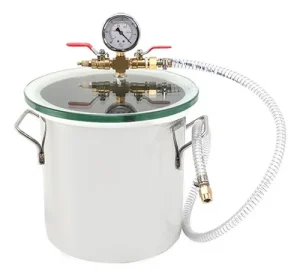
A vacuum chamber is an enclosed container from which air and other gases are removed using vacuum pumps, creating a low-pressure environment. This allows scientists to experiment in conditions similar to outer space or deep-sea pressure inverses.
These chambers vary in size — from small lab-scale models used to test material evaporation to vast structures like NASA’s Space Power Facility, one of the largest vacuum chambers in the world, capable of holding a full-scale spacecraft.
The principle is simple: the fewer gas molecules present, the fewer external variables affect an experiment. This makes vacuum environments ideal for precision measurements, such as quantum tests or surface science studies.
A Brief History of Vacuum Experiments
The concept of vacuum has intrigued philosophers and scientists for centuries. In ancient Greece, Aristotle denied its existence, calling it a “void impossible in nature.” It wasn’t until the 17th century that experiments began to challenge that idea.
Evangelista Torricelli, an Italian physicist, created the first barometer in 1643, proving that air had weight and could be measured. Shortly after, Otto von Guericke invented the Magdeburg hemispheres experiment — demonstrating the enormous pressure of the atmosphere by showing that teams of horses couldn’t pull two evacuated hemispheres apart.
Today, vacuum technology has evolved from philosophical curiosity to an essential foundation of modern science. As noted in Encyclopedia Britannica, it now supports everything from semiconductor manufacturing to particle physics research.
The Principles Behind Vacuum Technology
Creating a vacuum involves removing air molecules from a chamber until the desired pressure is reached. This can be achieved through several stages:
- Rough Vacuum: Using mechanical pumps to lower pressure to about 1% of normal atmospheric levels.
- High Vacuum: Employing diffusion or turbomolecular pumps to remove even smaller gas particles.
- Ultra-High Vacuum (UHV): Achieving pressures less than 10⁻⁹ torr, necessary for atomic and quantum experiments.
Maintaining such low pressures requires precise materials and seals. Even a tiny leak can reintroduce gas molecules, ruining delicate measurements. The walls of the chamber are typically made from stainless steel or aluminum, polished to reduce molecular adsorption.
Temperature control is also crucial. In some cases, experiments are conducted at cryogenic levels — near absolute zero — to reduce molecular motion and simulate deep-space environments.
Applications in Modern Science
Vacuum chambers are versatile tools across multiple disciplines:
- Physics: For studying particle interactions, plasma behavior, and quantum mechanics.
- Materials Science: For testing coatings, thin films, and corrosion resistance in low-pressure conditions.
- Space Research: For simulating the vacuum and temperature of space.
- Engineering: For evaluating performance and durability of equipment in extreme environments.
As noted by ScienceDirect, these controlled vacuums are indispensable for ensuring experimental reproducibility, especially where even microscopic contamination can alter results.
Vacuum Chambers and Space Research
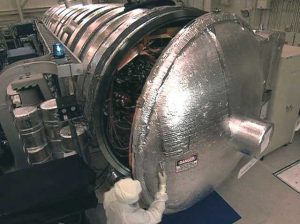
Perhaps the most iconic use of vacuum chambers lies in space simulation. Before any spacecraft leaves Earth, it undergoes rigorous testing inside these sealed environments to ensure survivability.
NASA’s Space Environment Simulation Laboratory in Houston is capable of replicating the vacuum, temperature, and radiation of outer space. The NASA Glenn Research Center uses its vacuum facilities to test satellites, propulsion systems, and even spacesuits under cosmic conditions.
These experiments simulate the temperature extremes of space — from over +120°C in sunlight to below -150°C in shade — while maintaining near-total vacuum. Engineers can thus observe material contraction, outgassing, and electrical performance under realistic conditions.
Material Science in the Void
In materials science, vacuum environments eliminate contamination, allowing precise observation of atomic and molecular processes. Techniques like thin film deposition, electron microscopy, and surface coating rely heavily on vacuum systems.
For example, semiconductor manufacturing requires ultra-clean environments to prevent impurities from affecting microchip performance. Even a single molecule of dust can ruin an entire wafer. That’s why cleanrooms and vacuum systems are paired to ensure molecular-level precision.
Experiments inside vacuum chambers also reveal how metals oxidize, how crystals grow, and how radiation affects composite materials. These insights contribute to building stronger spacecraft, more efficient solar panels, and advanced nanomaterials.
Biological Experiments and Life Support Studies
What happens to living organisms in a vacuum? Although complete exposure to vacuum is lethal for most life forms, short-term experiments help scientists understand how cells respond to extreme pressure loss.
For instance, biological samples such as bacteria and spores have been tested to study their resistance to space-like conditions. According to research published in the Nature Microgravity Journal, some extremophile microbes can survive temporary vacuum exposure, offering clues about possible life survival beyond Earth.
Vacuum chambers also assist in testing life-support systems and pressure suits, ensuring that astronauts can operate safely in low-pressure environments. These experiments bridge the gap between biology, physics, and engineering — showing how life can adapt, even in the harshest conditions.
Engineering and Industrial Uses
Beyond scientific research, vacuum chambers are fundamental in industries such as aerospace, automotive, and energy. They’re used for processes like:
- Vacuum Drying: Removing moisture from sensitive materials without heat damage.
- Vacuum Metallurgy: Purifying metals for high-performance components.
- Coating Technologies: Creating reflective layers for lenses, mirrors, and solar cells.
- Leak Testing: Ensuring airtight seals in fuel tanks, pipes, and containers.
These techniques rely on the same fundamental principles — that removing air creates a stable, controlled environment where variables can be precisely managed. Engineers often say that “a perfect vacuum is the perfect laboratory.”
Scientific Curiosities: Surprising Discoveries in Vacuum
Some of the most intriguing discoveries in modern physics emerged from vacuum-based research. One such phenomenon is quantum vacuum fluctuations — the idea that even “empty” space contains energy and transient particles appearing and disappearing constantly.
Another is the Casimir effect, where two uncharged metal plates placed very close together experience an attractive force, not because of any external energy, but due to the suppression of quantum fluctuations between them.
These discoveries challenge our understanding of “nothingness.” As theoretical physicists explain, even the vacuum is not truly empty — it hums with invisible energy, perhaps holding the key to dark matter and cosmic expansion.
The Future of Vacuum Research
The next generation of vacuum experiments is reaching unprecedented precision. Scientists now design quantum vacuum chambers for studying atomic behavior and testing the limits of fundamental physics, including gravitational waves and particle entanglement.
Meanwhile, engineers are developing miniaturized vacuum systems for portable laboratories, enabling field research in extreme environments on Earth or other planets. As space exploration expands, vacuum science will continue to play a vital role in ensuring safety, performance, and discovery.
From the smallest quantum experiment to the largest spacecraft test, the vacuum chamber remains one of humanity’s most powerful tools — a place where we recreate the silence of space to uncover the secrets of existence itself.
The Silent Laboratory of the Universe
As we’ve seen in “Inside a Vacuum Chamber: What Science Experiments Reveal in Extreme Conditions”, the vacuum is not a void but a vast frontier for discovery. These controlled spaces allow scientists to strip away distractions, revealing how matter and energy behave in their purest forms.
Whether in space simulation, quantum physics, or industrial innovation, vacuum chambers remind us that sometimes, by removing everything, we uncover everything — the laws, forces, and mysteries that define the universe itself.
Si quieres conocer otros artículos parecidos a Inside a Vacuum Chamber: What Science Experiments Reveal in Extreme Conditions puedes visitar la categoría Environmental Science & Sustainability.
Women in Science: Breaking Barriers and Achieving Excellence

The science of color psychology: The Scientific Influence of Color on Human Behavior
Psychology and Artificial Intelligence: How Human Behavior Shapes the Future of Intelligent Systems

Scientific Outreach: A Comprehensive Guide to Understanding and Communicating Science

What Is Science?

The limits of artificial intelligence: What can't machines do yet?