
Directory of Science: How to Evaluate Scientific Journals and Websites

7 min read
A directory of science is a curated index of scientific resources, journals, datasets, or research organizations. It helps readers find reliable sources by applying entry criteria such as peer review, indexing, and editorial transparency. Evaluating one means checking who runs it, what it includes, and how it verifies entries.
Science.gov, a U.S. federal portal, aggregates search results from more than 60 databases and 2,200 federal agency websites. That scale shows how a directory can organize public research without recommending any single source.
In this article
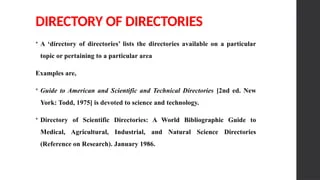
What Is a Directory of Science?
A science directory is a structured list of scientific journals, websites, databases, or research organizations. It differs from a search engine because human editors or fixed criteria decide what belongs. The strongest directories explain their inclusion rules; if the rules are visible, a reader can judge whether an entry was vetted for editorial standards.
A directory is not a publisher or a journal. It does not conduct peer review itself; it selects resources that meet stated criteria. For readers, the directory is only as trustworthy as its entry standards and its upkeep. For a definition of the research process those resources describe, see what science is.
Some directories group entries by field, audience, or type of resource. A student searching for open-access journals will use different filters than a journalist checking retraction records.
Types of Science Directories
Science directories come in several forms, and each answers a different question. A government portal helps someone search across public agency research. A journal directory helps someone check whether a journal meets open-access standards. A bibliographic index helps someone find peer-reviewed literature on a topic.
| Type | What it lists | Example |
|---|---|---|
| Federal science portal | Searchable records from U.S. government science agencies and their websites | Science.gov |
| Open-access journal directory | Journals that pass stated editorial and licensing checks | DOAJ |
| Bibliographic index | Citations to biomedical literature, with links to full text when available | PubMed |
| Library reference guide | Topic guides and research starting points maintained by librarians | Library of Congress Science Reference Services |
Each type has a different level of scrutiny. DOAJ, for example, lists journals that meet criteria for open access, editorial oversight, and licensing. Being listed in a maintained directory is not a guarantee, but it is a useful first filter. A bibliographic index such as PubMed focuses on citation data rather than recommendation; its homepage states that the database comprises more than 40 million citations for biomedical literature from MEDLINE, life science journals, and online books.
A directory is most useful when a reader knows what the directory is for. Checking whether a resource appears in Science.gov, DOAJ, or PubMed is a form of verification, but each list has its own scope. A site absent from one directory may simply fall outside that directory's topic or format.
For that reason, readers should pair directory checks with the evaluation steps below rather than relying on one list alone. Library guides, in particular, often annotate their choices, which can explain why a source was included or left out.
How to Evaluate a Science Journal or Website
Evaluation is not a single yes-or-no test. It is a set of checks that, together, reduce the chance of trusting unreliable material. The steps below apply to journals and to the sites that summarize science.
- The publisher or owner should be named clearly, with a public contact page, so the source can be held accountable.
- An editorial board with named editors and real affiliations is a basic signal.
- The peer review policy should state whether the journal uses peer review, what kind, and how long review generally takes.
- The journal title should appear in at least one trusted index, such as DOAJ or PubMed; a claim on the journal's own site is not enough.
- A correction and retraction policy should explain how errors are handled; COPE publishes related standards.
- Fees should be disclosed before submission, with no surprise charges after acceptance.
- Science pages should cite named studies, institutions, and dates rather than vague references to "experts."
These checks are useful because predatory and low-quality sites tend to fail more than one at the same time. A missing editorial board plus vague peer review plus unclear fees is a stronger warning than any single red flag alone. Public confusion can persist even when the evidence is clear; see when science fails to convince.
A preprint is a full paper posted before peer review. Reliable sites label a preprint as not yet peer-reviewed rather than presenting it as established evidence.
Peer Review and Indexing Checklist
Use this checklist when a journal or science site makes a claim that matters: a new treatment, a policy recommendation, or a statistic that will be repeated. The criteria come from practices described by COPE and from standard checks used by open-access and bibliographic directories. Peer review and indexing signals are only useful when they can be verified. A journal may display a logo that looks official, but the logo itself is not evidence. The following eight checks compare what a journal claims with what an independent record shows.
| Criterion | What to look for | Red flag |
|---|---|---|
| Editorial board | Named editors with institutional affiliations | No board, or board members who cannot be verified |
| Peer review policy | A clear statement of review type and handling | Peer review claimed but never described |
| Indexing record | Listed in DOAJ, Web of Science, or Scopus | The journal cites indexes it does not belong to |
| ISSN | A valid ISSN shown on the journal site | Missing ISSN or a number repeated from another title |
| Retraction policy | A stated process for corrections and retractions | No retraction policy, or retractions are hard to find |
| Fee transparency | Fees disclosed before submission | Charges requested only after acceptance |
| Scope and audience | A specific field and a clear readership | Scope so broad it could apply to any journal |
| Predatory signals | Peer review, ethics, and indexing claims that check out | Mass email invitations, fake impact factors, pay-to-publish pressure |
A journal does not need to be perfect in every row. A missing ISSN matters less than a fabricated editorial board. What matters is whether the journal can be checked against an independent record.
For open-access journals, DOAJ checks ISSN, editorial board, and licensing as part of its inclusion process. COPE has described retraction standards that help readers see whether a journal corrects errors instead of hiding them. When a journal fails several checks, the safest response is to look for another source, especially for health, medical, or policy claims.
Red Flags to Avoid
Some journals and science sites are designed to look credible while avoiding accountability. The warning signs below are common in predatory publishing and in low-quality science commentary.
- Mass email invitations asking for submissions or conference fees.
- No named editor, publisher, or contact address.
- A journal title that closely imitates an established journal.
- Claims of a "global impact factor" from organizations that do not exist.
- Fees advertised only after a paper is accepted.
- Broken links, copied author biographies, or editorial board photos taken from other sites.
- Science pages that cite no study, date, or institution.
None of these signs alone proves a source is dishonest. However, trustworthy journals and science sites rarely show several at once. The presence of two or three is enough reason to pause and use the checklist above before relying on the content.
In health and medicine, that caution matters even more, because a misleading source can shape a real decision. Well-sourced science sites also follow practices described in how science is communicated.
Where to Check a Journal or Site
A few public tools make verification easier. They do not replace judgment, but they provide independent records to check against a journal's own claims. These tools support scientific outreach by making reliable sources easier to find.
- Science.gov searches across U.S. federal science databases and agency sites.
- DOAJ offers a searchable list of open-access journals that meet stated criteria.
- PubMed provides citations to biomedical literature from MEDLINE, life science journals, and online books.
- COPE publishes resources on editorial ethics, retractions, and cases of suspected misconduct.
- Library of Congress Science Reference Services maintains topic guides and research starting points.
When checking a journal, its name can be searched in DOAJ or PubMed rather than trusting a banner on the journal's homepage. For retractions, COPE can reveal whether a journal corrects errors or lets them stand. Library reference services also offer guides that help readers find appropriate databases and directories for a subject. These tools are free to use, and the same checks can be run before sharing a study or acting on a claim.
FAQ
Is Directory of Science a database or a journal? No. Directory of Science is an editorial guide that explains science directories and criteria for evaluating them. It is not a database of journals and it does not review papers.
What should I check before trusting a scientific journal? A journal should be checked for an editorial board, a stated peer review policy, inclusion in a trusted index, a published retraction policy, and fee disclosure.
How do I know if a journal is peer-reviewed? The journal's website, publisher policy pages, DOAJ, and the databases that index it can indicate peer review. If the process is not described, the publisher should be asked.
Are all open-access journals credible? No. Open access describes a publishing model, not quality. DOAJ, COPE, and the journal's editorial transparency should be checked before relying on it.
Where can I find free science directories? Science.gov, DOAJ, PubMed, arXiv, and the Library of Congress Science Reference Services are public starting points.
Sources
- Science.gov — https://www.science.gov/
- Directory of Open Access Journals (DOAJ) — https://doaj.org/
- Committee on Publication Ethics (COPE) — https://publicationethics.org/
- PubMed — https://pubmed.ncbi.nlm.nih.gov/
- Library of Congress, Science Reference Services — https://www.loc.gov/rr/scitech/
This page is for general information and does not replace advice from a qualified professional.
Si quieres conocer otros artículos parecidos a Directory of Science: How to Evaluate Scientific Journals and Websites puedes visitar la categoría Science & Society.

Keep reading