

Lab-Grown Organs: How Close Are We to Bioprinting Transplants? – A 2026 Science Overview
16 minutes ago · Updated 2 seconds ago

Organ transplantation has saved countless lives, yet global demand dramatically outpaces supply. Every year, thousands of patients die waiting for a donor organ. In response, scientists are racing toward an ambitious solution: growing fully functional organs in the lab through advanced biotechnologies such as 3D bioprinting, organoids, and stem cell engineering. In this article, we’ll explore the current state of lab-grown organs, the challenges researchers face, and how close we truly are to seeing bioprinted organs used in clinical transplants.
Table
Why Lab-Grown Organs Matter
The shortage of transplantable organs is a public health crisis. In the United States alone, more than 100,000 people are currently on transplant waiting lists, and an estimated 17 patients die each day due to the scarcity of available organs. Building organs in a laboratory could eliminate dependency on donors, reduce immune rejection, and save countless lives worldwide. However, creating organs that replicate the complexity and functionality of the human body remains extremely challenging.
Understanding the Science Behind Lab-Grown Organs
Stem Cells and Organoids
At the foundation of lab-grown organs are stem cells — undifferentiated cells with the potential to become nearly any cell type in the body. Scientists culture stem cells in controlled environments to form miniature, simplified versions of organs known as organoids, which mimic key aspects of organ structure and function. Organoids are invaluable for disease research, drug testing, and early-stage biomedical exploration. :
While organoids have helped researchers understand organ development, they are too small and simple to serve as transplantable organs. Their most promising application currently lies in medical research and personalized medicine rather than therapeutic replacement. However, this knowledge base provides critical insights into how cells organize themselves into functional tissues.
3D Bioprinting: Building Organs Layer by Layer
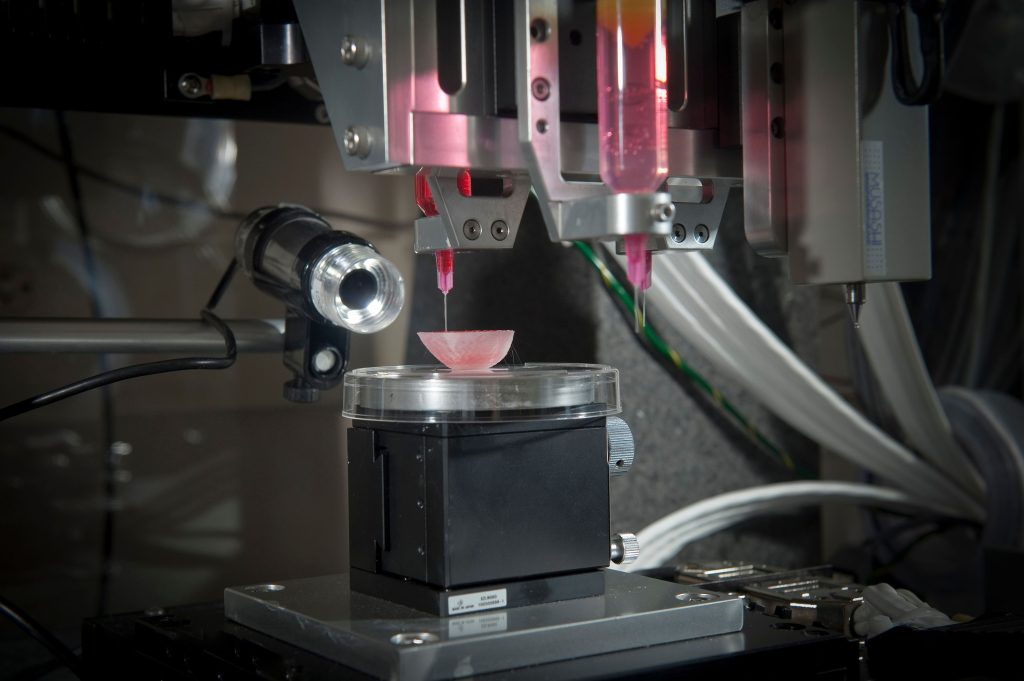
To move beyond organoids, scientists have turned to 3D bioprinting. Similar to traditional 3D printing, bioprinting uses specialized “bioink” — combinations of living cells and biomaterials — to fabricate three-dimensional biological structures with precision. This process can potentially recreate the intricate architecture of human organs, including cellular organization and vascular networks necessary for blood flow.
Recent innovations include printing vascular channels directly into tissues, which improves nutrient delivery and helps maintain cell viability in thicker constructs — a major step toward building organs on a scale usable for transplantation. These advancements hint at how we might soon overcome one of the biggest barriers in regenerative medicine: creating organs large enough and complex enough to function fully in the human body.
Current Progress in Bioprinting and Tissue Engineering
Researchers worldwide are making incremental but meaningful progress toward transplantable lab-grown organs. Although fully functioning bioprinted organs are not yet available for human transplants, several achievements illustrate how far the field has advanced:
- Skin grafts and wound healing applications – Some bioprinted skin tissues are already being tested in clinical settings for burn treatment. :
- Miniature organs – Scientists have bioprinted miniature kidneys capable of basic filtration functions, although these are not yet ready for transplantation.
- Heart tissue constructs – Bioprinted heart tissues that mimic vascular structures represent progress toward functional cardiac organs.
- Advanced liver tissues – Research teams have developed liver organoids with built-in blood vessels, addressing a longstanding challenge in organ engineering.
The Main Technical Challenges Remaining
Despite the promise of lab-grown organs, major obstacles remain:
Vascularization
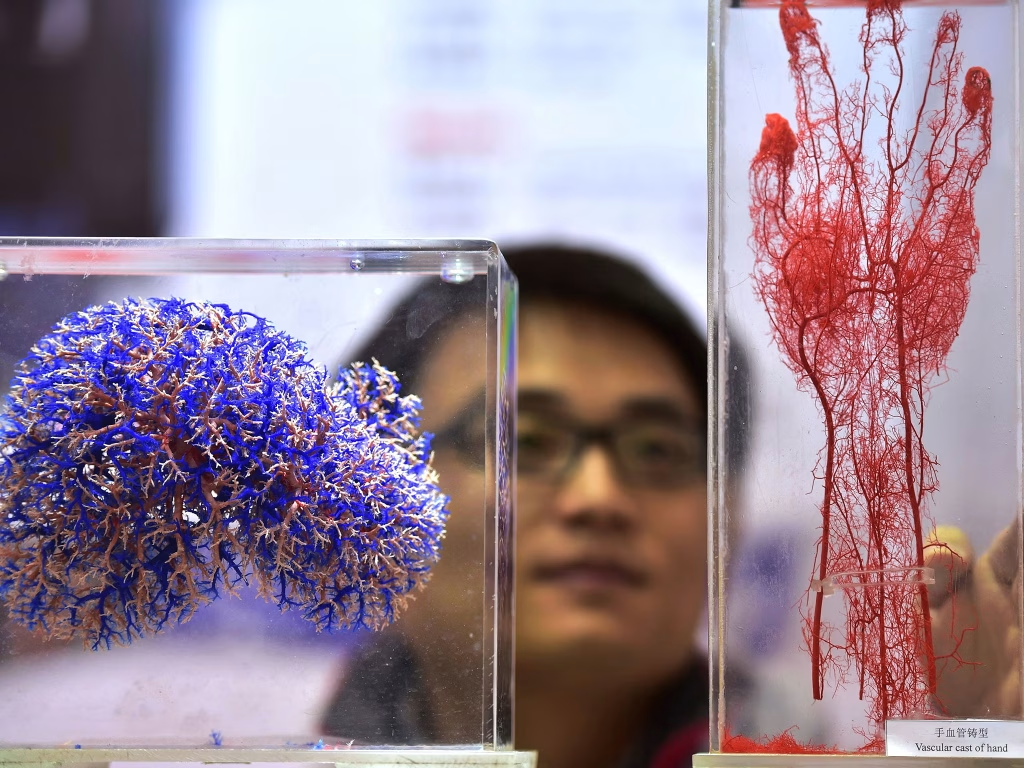
Any functional organ — from the heart to the liver — must have a complex network of blood vessels capable of delivering oxygen and nutrients to cells. Designing and printing vascular networks that can support large tissues is one of the most significant barriers in the field. Researchers are developing model-guided vascular frameworks to overcome this issue, but fully functional systems still need refinement.
Cell Integration and Immune Compatibility
Even if organs can be printed with the right structure, ensuring that cells integrate seamlessly and function in harmony with the human body is another hurdle. Personalized bioinks made from a patient’s own cells may reduce immune rejection, but this approach is complex and expensive. Scale and Complexity
Partial tissues are achievable, but scaling up to create whole organs — especially those with diverse cell types and intricate architecture like kidneys — remains difficult. This complexity extends to the nervous system and the long-term sustainability of printed organs.
What the Future Holds
The outlook for lab-grown organs is optimistic yet cautious. Experts suggest that we may see transplantable bioprinted tissues in the next decade for certain applications, but fully functional human organs capable of replacement transplants may take longer due to technical, regulatory, and ethical considerations. Continued investment, interdisciplinary collaboration, and robust clinical trials will be crucial for this technology to realize its transformative potential.
In the meantime, bioprinting plays a vital role in accelerating drug discovery, reducing reliance on animal models, and improving personalized medicine. Ultimately, lab-grown organs could revolutionize how we treat organ failure and extend human healthspan.
For related insights on biotechnology and community impact, consider reading about Community Biotechnology, and how emerging sciences are shaping society. Additionally, exploring articles like Recently Discovered Vaccines highlights how cutting-edge science translates into real-world healthcare solutions. For ethical considerations in technology, Bias in Artificial Intelligence offers perspective on responsible innovation. Lastly, understanding how science communicates with the public can be gleaned from Science on Social Media.
Frequently Asked Questions
How close are we to transplanting lab-grown organs in humans?
While partial tissues show promise, fully bioprinted transplantable organs are still years away due to complex vascular and functional challenges.
What technology is used to grow organs in the lab?
Researchers use 3D bioprinting with bioinks made from living cells and scaffolds to build tissue structures layer by layer.
Why can't we print organs like science fiction movies?
Organs require internal blood vessels and diverse cell types, making them far more complex than simple printed objects.
Are there ethical concerns with lab-grown organs?
Yes, issues include consent for cell sourcing, regulatory oversight, and long-term safety of implanted tissues.
What organ is most likely to be printed first?
Simpler tissues like skin, cartilage, and blood vessels are closest to clinical use, with organs like kidneys and hearts further behind.
Si quieres conocer otros artículos parecidos a Lab-Grown Organs: How Close Are We to Bioprinting Transplants? – A 2026 Science Overview puedes visitar la categoría Biotechnology & Genetic Research.
The limits of artificial intelligence: What can't machines do yet?

Science on Social Media: What Is Gained and What Is Lost in Short Form

What Is Science?

Artificial intelligence applied: the most surprising examples

Comprehensive Guide to Recently Discovered Vaccines

How Long Does a UTI Last? Scientific Insights into Duration, Treatment, and Recovery